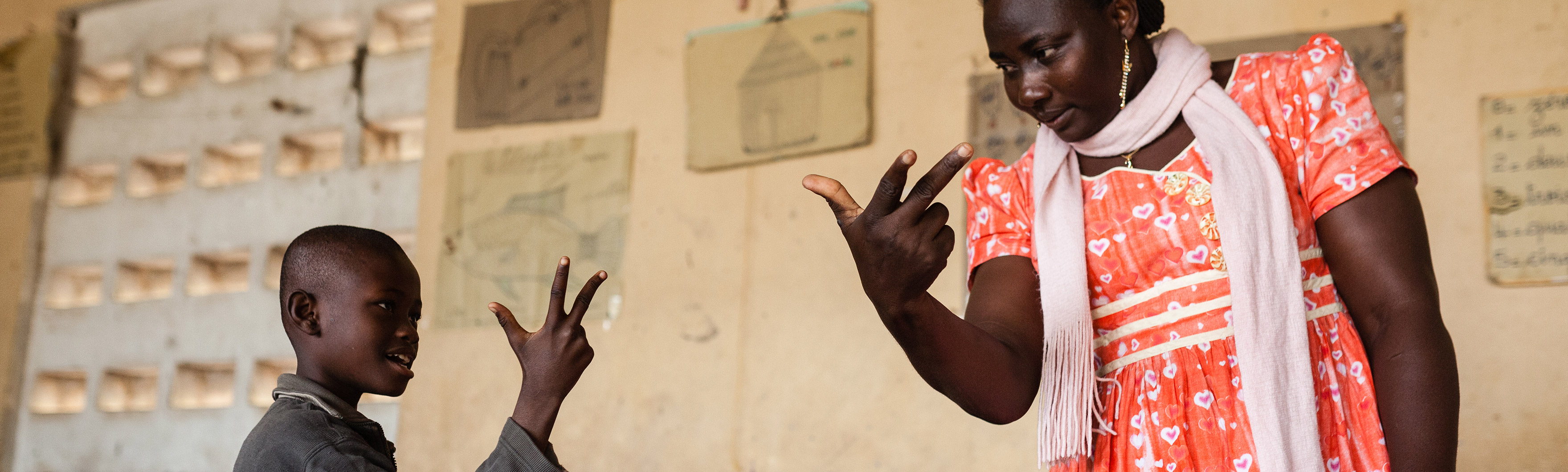
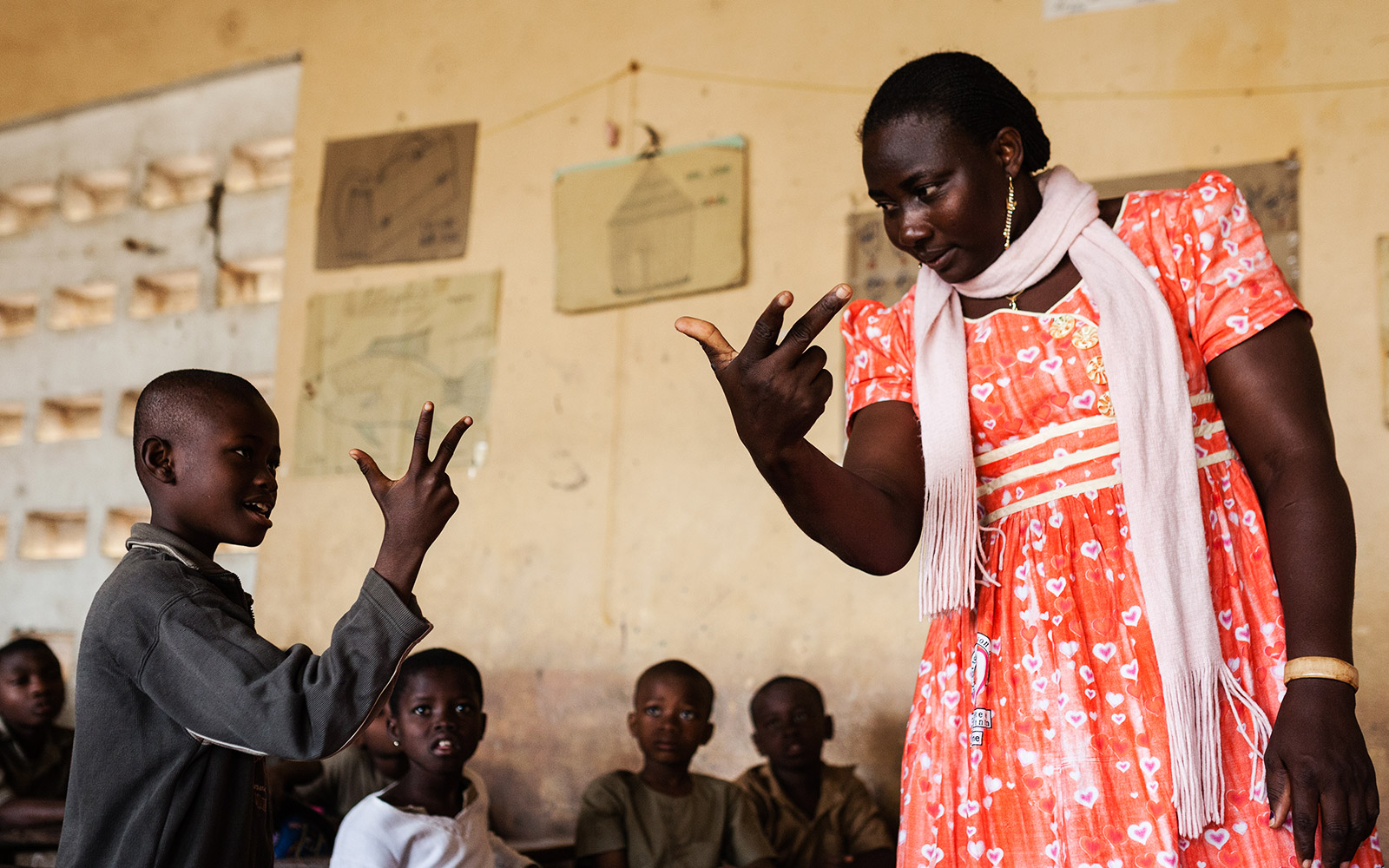
HI has been promoting access to school for children with disabilities since 2004 and is developing projects in 28 countries in Latin America, West, Central, North and East Africa, the Middle East and Asia.
28
countries of intervention in 2024
72 HEURES
notre temps de réponse
opérationnelle
284,556
beneficiaries in 2024
Inclusive education, offering hope to children with disabilities
Children with disabilities are ten times less likely to attend school than other children. This exclusion limits their opportunities to acquire the skills they need to develop their full potential and participate in the life of their community. It also deprives them of their civic, political and economic rights. Inclusive education generates real hope for the future for many children. It also plays a vital role within society at large, reducing the stigma surrounding disabilities.
Our work to improve the enrolment of disabled children in schools focuses on:
- Raising awareness at community level about the right to inclusive education for all, and strengthening the role of families in their children's education through direct support and assistance.
- Improving teacher's educational practices to be more inclusive for children with disabilities through training and coaching.
- Identifying children who are not in school or in school with special educational needs and/ or disabilities and make relevant referrals ( rehabilitation, health, protection etc).
- Supporting organisations of people with disabilities to defend the right to inclusive education for all children with disabilities.
- Providing technical assistance for the development of inclusive education policies at the national level.
Innovation to boost inclusive actions
We use innovative working methods and technologies both to support systems level working ( through remote studies, and working on system strengthening for example) but also at the level of the child.
This can involve using a device to help a child with communication difficulties express themselves with a touch screen device, or using audio output on a screen reader for a child who is blind. Innovations such as using specialised itinerant teachers are also being developed to support children with disabilities with additional educational needs to access local schools.
The depiction and use of boundaries, geographic names and related data shown on this map are not warranted to be error free nor do they necessarily imply official endorsement or acceptance by HI.
In Rwanda, 12-year-old Gilbert who has a physical disability caused by polio. He started school when he was 11 years old, in Ecole Ste Agnes, in Rutsiro District. HI staff identified him as an out of school child and referred him to be fitted for an appropriate wheelchair. They also worked with his family, community, peers and teachers to break down the negative stigma associated with his disability, improved the accessibility of the schools by creating ramps, accessible toilets, classrooms, desks and level pathways, developed a peer support system, and are training teachers to use a range of teaching techniques to accelerate learning for children who are late starters. Gilbert loves coming to the front of the class to share what he knows and be an active member of the class!
For more information about our projects and our approach to inclusive education
Julia MC GEOWN
Global Inclusive Education specialist
Photos : © R. Binard / HI - © J. Mc Geown / HI