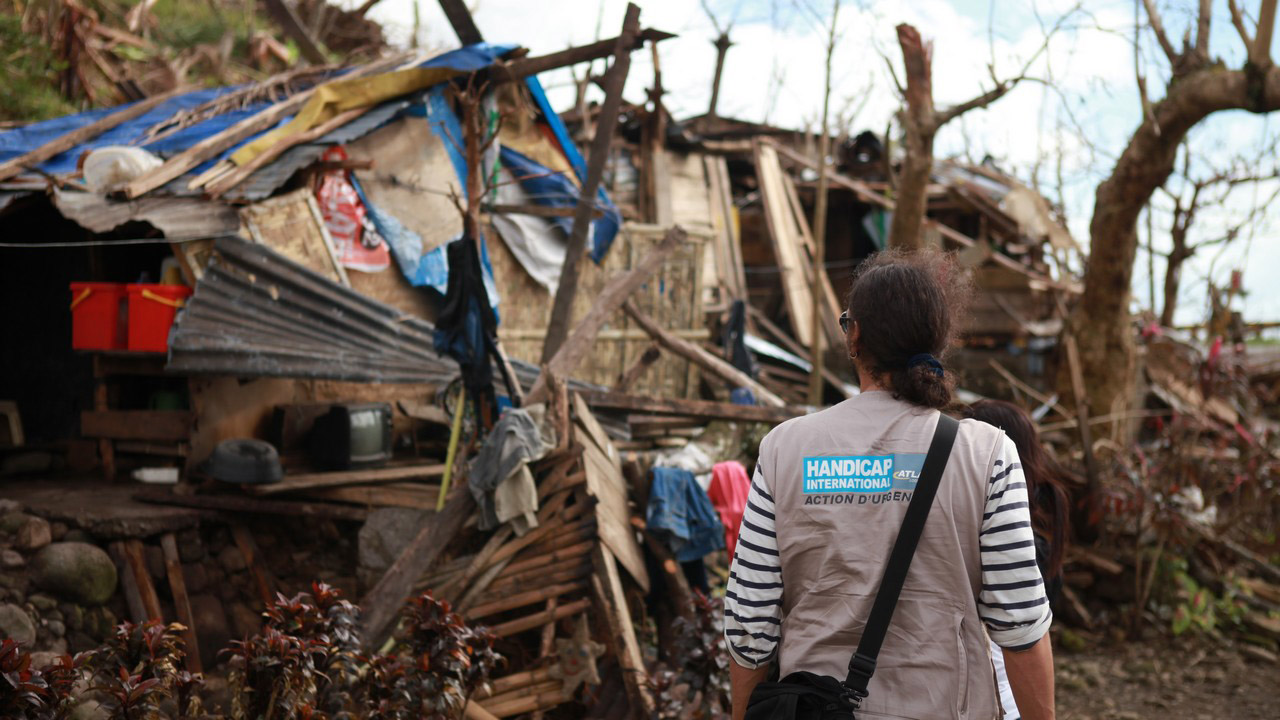
In the Philippines, faced with the increasing frequency and severity of climate-related risks, HI has been working for several years to preserve the dignity and improve the resilience of the populations most at risk from the consequences of climate-related disasters and natural hazards, such as typhoons, floods and earthquakes.
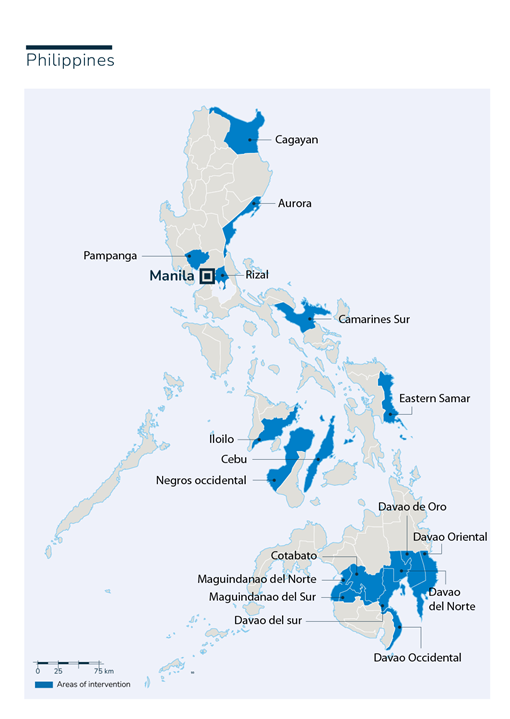
In the Cagayan Valley, Bicol, Eastern Visayas, and BARMM regions, HI works to provide effective anticipatory action and humanitarian aid, adopting a participatory and inclusive approach regarding age, gender and disability. This includes risk awareness activities, support for identified organisations of people with disabilities, and advocacy with local institutions to ensure that the interests of the most vulnerable are considered in the humanitarian response. HI also addresses the needs of the most vulnerable populations—such as people with disabilities, older people, women and children—in terms of food security, shelter, water and sanitation, health and protection. Finally, the organisation conducts psychological first aid and supports efforts to ensure the population has access to quality psychosocial support services, enabling them to cope with trauma.
Furthermore, HI is part of a consortium of humanitarian organisations working with government agencies and local, national and community based civil society organizations to strengthen preparedness mechanisms for communities most at risk of flooding, to ensure that no one is left behind when an emergency strikes the country.
In addition, HI builds inclusive employment pathways for youth with disabilities in Metro Manila and CALABARZON region, providing training on job or business readiness skills towards developing a career or business plan.
Finally, the organisation works to improve access to inclusive healthcare services and information for children and young people under the age of 25 with type 1 diabetes. The project aims to ensure access to appropriate resources for understanding and managing the condition, to enable professionals to care for patients and create a network of inclusive healthcare facilities, and to ensure that patients have access to insulin, blood glucose test kits and other necessary medical supplies.
- HI staff: 45 people
- Direct beneficiaries supported by HI in 2025: 17,747 people
- Indirect beneficiaries of HI’s work in 2025: 199,567 people
- Programme launch date: 1985