In Bangladesh, HI ensures that people with disabilities are integrated into society and provides support to thousands of Forcibly Displaced Myanmar Nationals who have fled Myanmar.
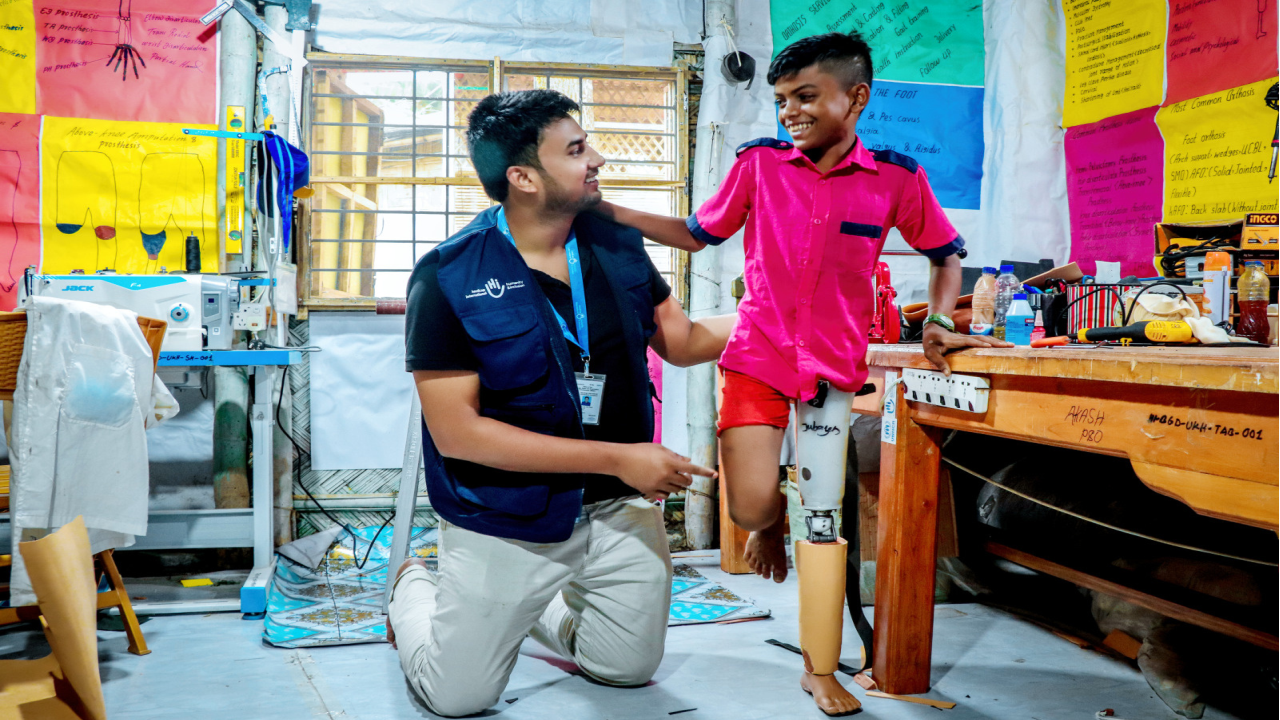
In response to the influx of hundreds of thousands of Rohingyas fleeing neighbouring Myanmar since August 2017, HI is providing assistance in Cox’s Bazar to people living in extreme precarity. The teams deliver rehabilitation services including the provision of prostheses and orthoses and stimulation therapy for malnourished children, mental health and psychosocial support, and protection against violence and abuse to thousands of people. The organization is also active in inclusive humanitarian action, by strengthening humanitarian coordination mechanisms, the empowerment of organizations for people with disabilities and capacity building of other humanitarian actors.
HI encourages the inclusion of the most vulnerable by supporting their access to services, such as rehabilitation care, inclusive employment by offering vocational trainings, micro finance and support towards self-employment and wage employment, and their participation in society.
HI also takes action to ensure that people with disabilities have access to a source of income, giving them financial independence and improving their acceptance by their communities.
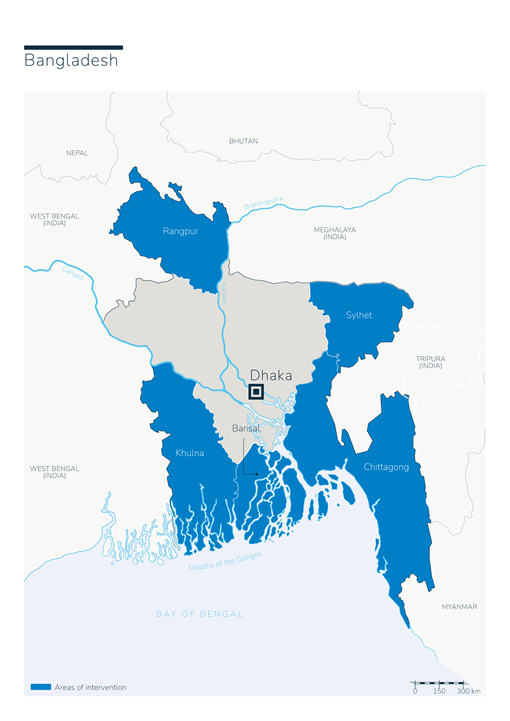
HI works with most vulnerable communities, especially persons with disabilities living in disaster prone and environmentally fragile areas to include them in disaster risk reduction plannings and to build their capacities to deal with disasters. The organization offers also technical support and institutions on inclusive disaster risk reduction and empowers civil society organizations. Timely early actions like safe evacuation, shelter repairs, cash assistance, provision of assistive devices and psychosocial support are set in collaboration with local authorities.
Bangladesh is one of the most densely populated countries in the world and has made notable economic progress over recent decades, reaching lower-middle-income status in 2015. Despite this progress, the country continues to face a complex humanitarian situation shaped by persistent poverty, inequality, climate vulnerability, and large-scale displacement.
Today, millions of people in Bangladesh remain in vulnerable conditions. While poverty rates have declined overall, significant disparities persist, and many communities continue to experience limited access to basic services, particularly in rural and disaster-prone areas.
Bangladesh is highly exposed to the impacts of climate change. Frequent cyclones, flooding, landslides, and river erosion regularly cause widespread damage to homes, infrastructure, and livelihoods. Large portions of the country are submerged each year during the monsoon season, leading to repeated displacement and loss of income. These climate-related shocks disproportionately affect the most at-risk populations, including people with disabilities, who often face additional barriers in accessing assistance.
One of the most significant humanitarian challenges remains the protracted Rohingya refugee crisis. Bangladesh hosts over one million Rohingya refugees who fled violence in neighbouring Myanmar, the majority of whom live in camps in Cox’s Bazar. Protection risks remain high, particularly for women, children, and persons with disabilities.
HI is an independent and impartial aid organisation working in situations of poverty and exclusion, conflict and disaster. We work alongside people with disabilities and vulnerable populations, taking action and bearing witness in order to respond to their essential needs, improve their living conditions and promote respect for their dignity and fundamental rights.