The World Urban Forum 2018-WUF9 hosted a number of events where different actors could share their experience in implementing the New Urban Agenda-NUA, a document endorsed by the UN General Assembly in December 2016, over a year ago.
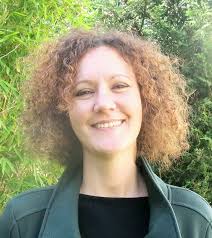 Erika Trabucco is HI's Technical Advisor on accessibility based at the Lyon headquarters. Erika is an Italian architect with ten years of experience working in a firm with a specialization on architectural projects in a development context (Burkina Faso, Chad, Madagascar, South Sudan, Central African Republic) for various NGOs, UN agencies and the EU. She has been working for HI since March 2015, first as a reconstruction expert and accessibility focal point in Palestine/Gaza and in Haiti.
The New Urban Agenda: we need to walk the talk!
The NUA is an action-oriented document that sets the global standards of achievement in sustainable urban development and sets the framework for sustainable urban development globally for the coming twenty years. It addresses topics like environment, gender, energy, resilience, waste management as well as equity, accessibility, universal design and access for all. In particular, and thanks to the efforts of the People With Disabilities/Partner Constituent Group during the Habitat III conference in Quito, its article 36 explicitly refers to people with disabilities and to the commitment:
“to promoting appropriate measures in cities and human settlements that facilitate access for persons with disabilities, on an equal basis with others, to the physical environment of cities, in particular to public spaces, public transport, housing, education and health facilities, public information and communication (including information and communications technologies and systems) and other facilities and services open or provided to the public, in both urban and rural areas.”
In spite of all that, almost all the sessions I attended presented urban projects, strategies or policies that took in very little account inclusion or accessibility of persons with disability. The way that leads to a really inclusive urban development is paved by the international frameworks, but a lot has still to be done to facilitate the practical implementation of the NUA’s principles.
Critical steps for an inclusive urban development
Persons with disabilities have been very active within the WUF9 in organizing sessions and events spreading the message that urban development needs to be inclusive if it wants to be sustainable; in particular they organized a stakeholder’s roundtable that, from the experience of various actors, outlined some crucial elements that have to be taken into account by local actors:
- Methodology: it is essential that at national and local level procedures and mechanisms are put in place clearly addressing accessibility, including standardization processes and ad hoc regulations;
- Data collection: better and clearer evidence is crucial to inform advocacy strategies and to orient all interventions;
- Partnerships: alternative/innovative partnerships are needed in order to tackle all the different aspects of inclusive urban development, and in particular between civil society and governments;
- Participation: persons with disabilities have to be involved from the beginning and in all the stages of the process;
- Academia: the notion of inclusion has to be embedded in the technical curriculum of professionals, in order to be fully understood and practiced;
- Innovation: accessibility has often to do with technology, and we need to invest on innovation and research in order to improve the quality of available products;
- Funds: awareness must increase that accessibility needs clearly allocated and monitored budgets;
- Sharing of knowledge: it’s very important to collect good practices and to facilitate mutual learning processes.