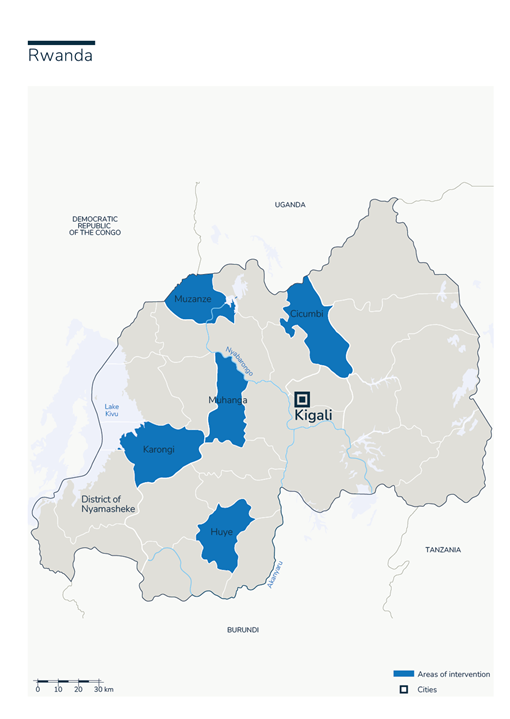
A small, landlocked country, Rwanda is hilly and fertile, with a dense population of around 12.5 million people. Rwanda’s political, social and economic context was profoundly shaped by the 1994 genocide against the Tutsis, during which more than 800,000 people lost their lives. Since then, the country has enjoyed a period of political stability and general security, as well as sustained economic growth, with gross national income per capita having increased by 130.9% between 1990 and 2019. Rwanda aspires to become an upper-middle-income country by 2035, thanks to ambitious development and poverty reduction strategies.
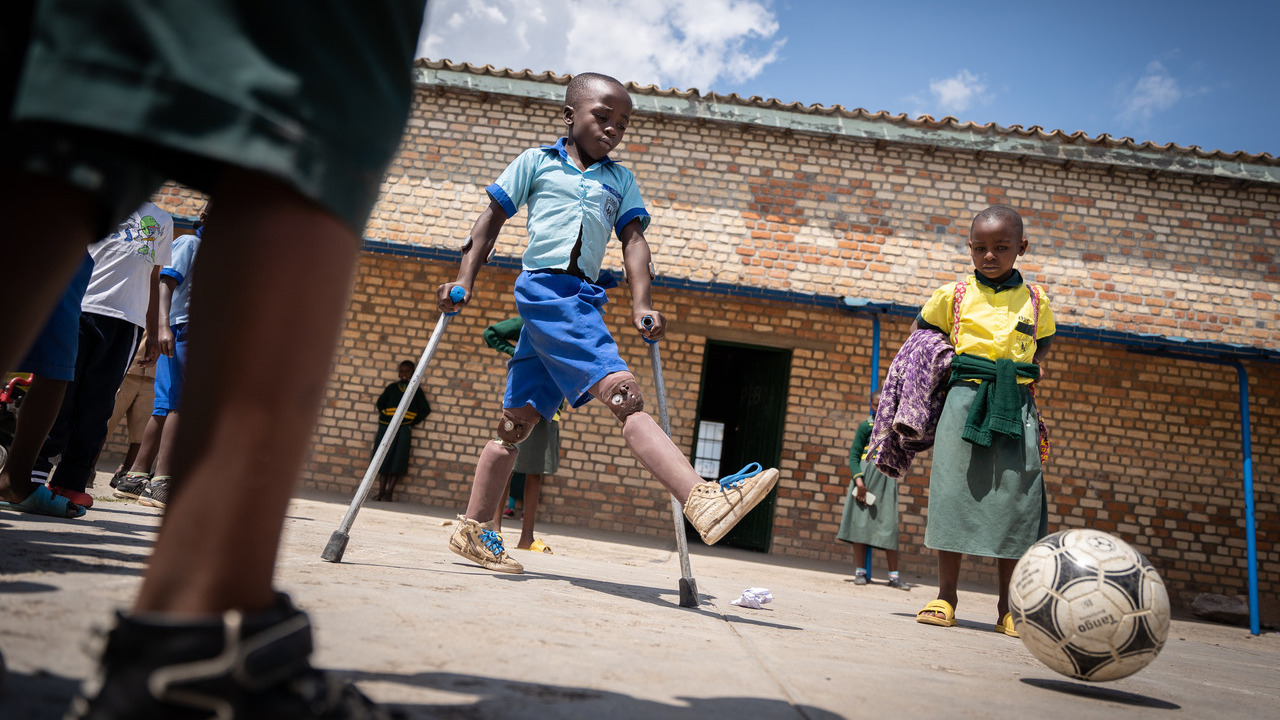
However, structural challenges remain: infrastructure is still limited, access to electricity is unequal, and the economy is dependent on international aid. Despite progress in health, education and housing, many vulnerable people, particularly those with disabilities, struggle to access basic services and to integrate fully into society.
On the humanitarian front, Rwanda hosts more than 135,000 refugees, mainly from the Democratic Republic of Congo, where armed conflicts have caused massive population displacement and a major humanitarian crisis. The integration of this particularly vulnerable population and its access to basic services and humanitarian aid are major challenges for the country.
- Population: 14.8 million
- HDI: 0.578 (2023)
- GDP per capita: approximately USD 999 (2024)